Who said it and where
Michael Barr is one of the seven governors of the Federal Reserve. On Monday, November 16, he spoke at a conference on AI in finance, held in Milan. The speech is called "Some Potential Financial Stability Implications of Artificial Intelligence," and the Fed posted the full text. (Federal Reserve)
Two things to know before the numbers. First, most of them come from the Fed's Financial Stability Report, which came out last Friday. Barr was walking through it. Second, the speech carries the usual note that the views are his own and not necessarily those of the rest of the Fed.
The three numbers
- $800 billion. That's ordinary debt, the kind that shows up on a company's books. Barr said the debt of the seven largest AI firms "has been growing significantly in 2026 and is expected to exceed $800 billion before year's end." He didn't name the seven.
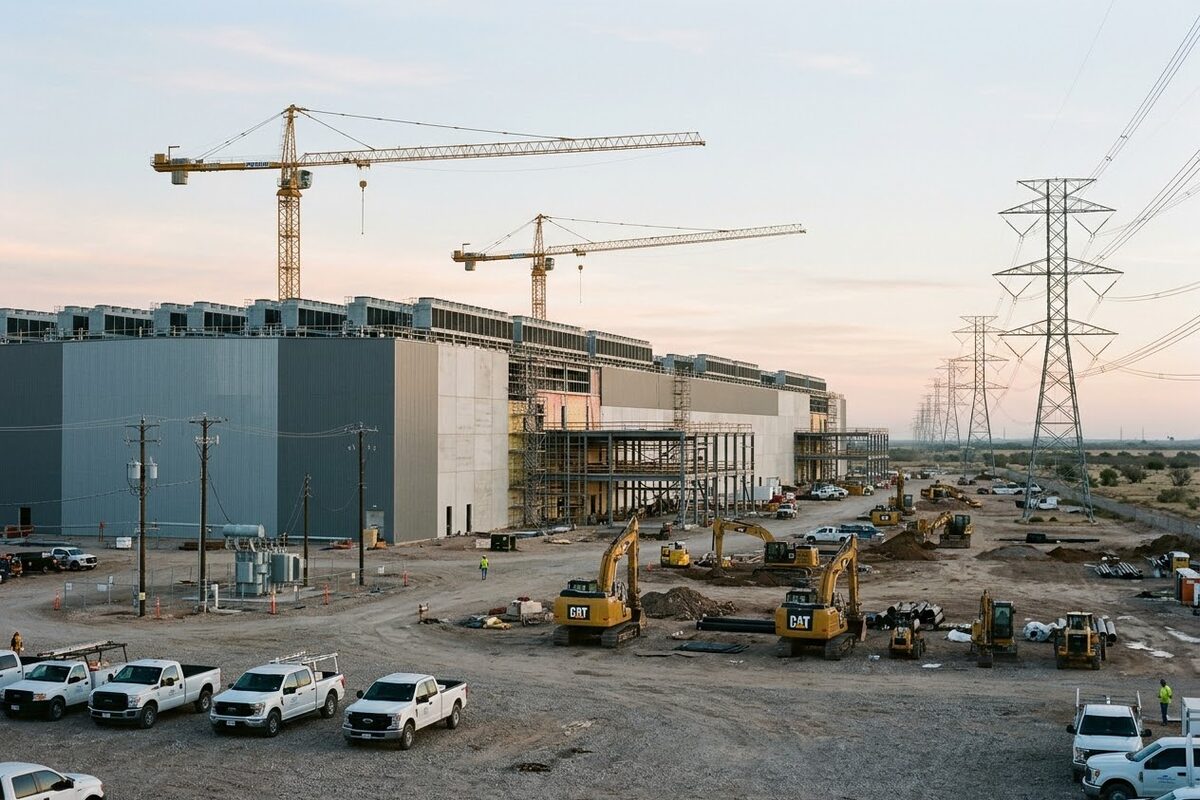
- $3 trillion. That's promises, not loans. Long leases on data centers, contracts to buy electricity for years, and guarantees about what a building or a batch of chips will be worth later. The Fed's report estimates the "potential maximum nominal value" of these now "exceeds $3 trillion." Barr said they've grown even faster than the debt.
- $100 billion. That's how much the big cloud companies and chip makers have invested in AI labs and cloud startups. Barr called it "a form of 'circular financing,'" because the startups turn around and spend the money renting or buying chips from the same companies that invested in them.
What "off the balance sheet" means
Think of a household. The mortgage and the car loan are debt. Everyone can see them. But say you also signed a ten-year lease on a storage unit, agreed to buy a fixed amount of heating oil every winter, and co-signed your cousin's truck loan. None of that is a loan in your name. All of it is money you may have to pay.
That second pile is what the $3 trillion is. Companies have to disclose these commitments, but they sit in the footnotes, not in the debt total. So a company can look lightly indebted and still owe a lot.
The co-signing part is what Barr spent the most time on. Smaller AI companies with weaker credit are borrowing against data centers and chips. To help them get those loans, bigger companies often guarantee what the buildings or chips will sell for later. If AI demand holds up, nobody ever collects on those guarantees. If it doesn't, the bill goes to the big company.
Read the $3 trillion carefully
You'll see headlines today that add $800 billion and $3 trillion together. Don't. The speech itself explains why:
- It's a ceiling. "Potential maximum" means the most that could come due if everything went wrong at once, not what anyone expects to pay.
- It's counted differently. A footnote says these commitments are added up at face value over many years, while debt is not, which "complicates comparisons." A 15-year lease counts all 15 years of rent.
- Much of it is ordinary business. A long contract for electricity isn't reckless. It's how you run a data center.
What Barr did not say
He didn't say a crash is coming, and it's worth quoting him, because the headline version sounds scarier than the speech.
- On losses: "Given the still-limited amount of debt backing the current boom, I'm less concerned about direct losses."
- On what worries him: "a sharp reversal could lead to rapid deleveraging and, potentially, self-reinforcing fire sales." In plain terms, if a lot of investors who borrowed to buy AI stocks had to sell at once, the selling could feed on itself.
- On banks: he said the large amount of capital at the biggest banks is "a bulwark against spillovers."
- On stock prices: stocks are expensive compared with history, he said, "though not nearly as low as the levels reached during the dot-com stock market boom." (He's talking about the extra return investors demand for holding stocks. Lower means pricier.)
- On AI itself: "I am an optimist about the long-term promise of AI." And on how the boom ends: "Only time will tell."
- On older chips: one common fear is that last year's AI chips lose value fast. He said rental rates for older chips "appear to be holding up."
He also proposed no new rule. The word he used for the off-the-books commitments was that they need "close monitoring." And he said nothing about interest rates or the Fed's December 9 meeting.
Monday in the market
- S&P 500: down 1.92% to 7,416.59.
- Nasdaq Composite: down 2.49% to 24,509.76. It's now more than 10% below its October 6 record, which is what traders call a correction.
- Dow: down 1.41% to 51,608.17.
- Nvidia: down 4.12% to $156.14.
(Reuters)
I want to be careful here. None of the market reports I read blamed Barr's speech for the drop. They pointed to nerves before Nvidia's results, to Nvidia's CEO leaving last week, and to a reported US rule on access to advanced AI chips. The speech and the selloff happened on the same day. That's all I can say about the connection. (Schwab)

Today: Nvidia at about 4:20 p.m. Eastern
Nvidia posts its results after the market closes today, with a call at 5 p.m. Eastern. I covered what to expect in Monday's preview: the company's own forecast is $108 billion in revenue, and it's the first report since Jensen Huang resigned.
Barr's speech is a good way to understand why this one report matters so much. Nvidia sells the chips. Its customers are the companies doing the borrowing, the leasing and the guaranteeing. Analysts quoted by Schwab put Nvidia's share of advanced AI chips at about 80%. If its forecast for next quarter is strong, it means the customers are still buying and the promises look safe for now. If it's weak, people will start doing the math on those promises.
What I'd do, and not do
I'm not a financial advisor and this isn't personal advice. It's how I think about it with my own retirement account.
- Don't sell because of a speech. A Fed governor describing a risk is the system working. The risks nobody is watching are the ones to worry about.
- Keep the paycheck contributions going. When prices fall, the same contribution buys more shares. Stopping during a dip is how people lock in the bad part and miss the recovery.
- Check for a pile-up. An S&P 500 fund is already heavy in these companies. If you also own a tech fund and a few AI stocks on top, you own the same bet three times. That's the one thing here worth 15 minutes of your time.
- Money you need within a couple of years doesn't belong in stocks. That was true before Monday. A week like this is just a reminder.
- Don't trade tonight. Prices after the close swing hard on little volume, and the first move after earnings often reverses by morning.
I wrote about the borrowing behind the AI buildout a week ago, when it was mostly analysts talking. Now the Fed has put its own numbers on it. That doesn't make a bad outcome more likely. It does mean the people whose job is to watch for it are watching.
Verified November 16, 2026, from the Federal Reserve's text of Governor Barr's speech, Reuters' closing market report, Schwab's market update and StockTitan. The $3 trillion figure is the Fed report's estimate of a maximum, counted at face value, and isn't directly comparable to the debt figure. The 80% chip share is an analyst estimate. Written Monday night, before Nvidia's results. Nothing here is personal financial advice.
Comments
Be kind and stay on topic.
No comments yet. Be the first.