
Where rates are
If you've been expecting rate cuts, this year has gone the other way. The Fed raised its target range by a quarter point to 3.75% to 4.00% on September 16, and held it there on October 28. Two of the twelve voters, Lisa Cook and Beth Hammack, wanted another hike in October. The statement said the economy is "expanding at a strong pace" and inflation "remains elevated." (Federal Reserve, September statement)
Then on Friday, the October jobs report came in far stronger than expected: 165,000 jobs against about 65,000 forecast, unemployment at 4.1%, and wages up 3.1% from a year ago. After that, futures traders put about 77% odds on another quarter-point hike at the December 8 and 9 meeting. That's a market bet, not a Fed promise. The 10-year Treasury yield ended the week around 4.86%, down from 5.31% in early October but still high. (BLS, 24/7 Wall St., US Treasury)
Why the AI companies care
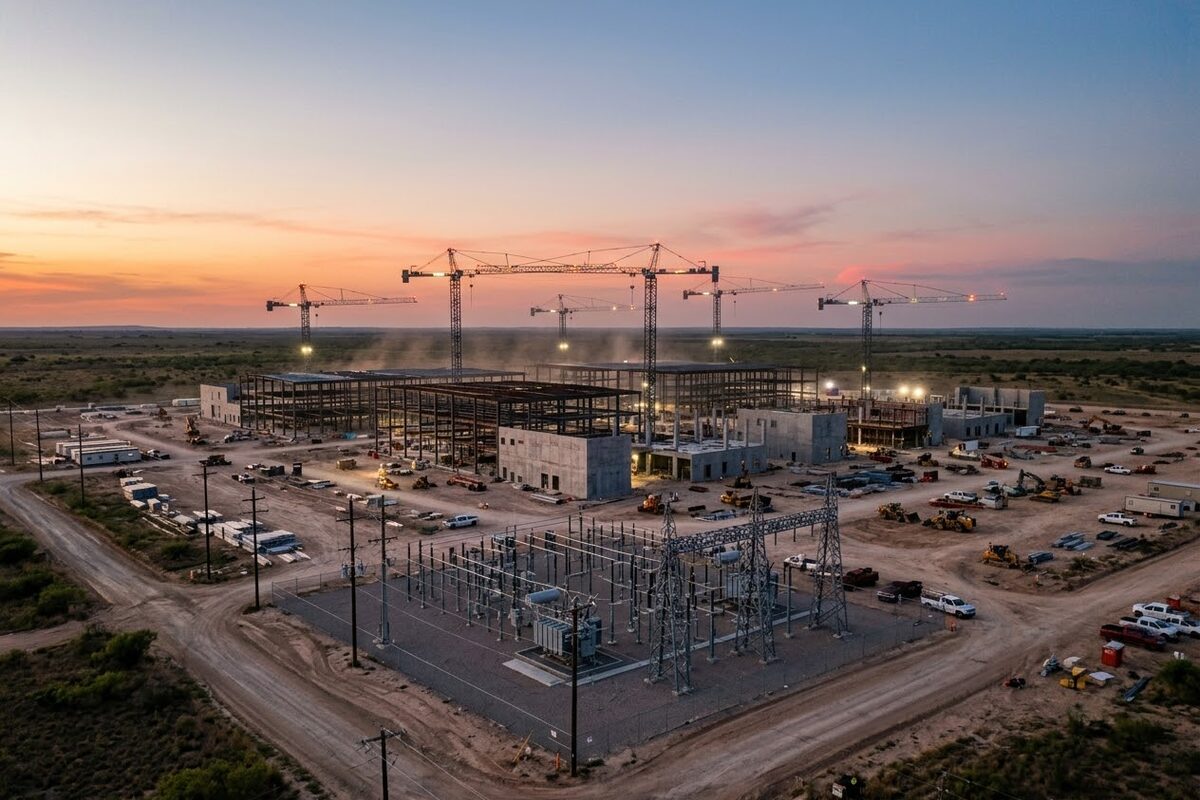
The four biggest spenders are pouring staggering amounts into data centers. In their latest quarter, Alphabet spent about $51 billion, Amazon about $76 billion, Microsoft $45 billion and Meta $35 billion, and they all say next year will be higher. That's more than even they can comfortably pay for out of cash. (CNBC, Meta)
You can see it in free cash flow, the money left over after running the business and paying for all that building. Alphabet's was negative $9.1 billion last quarter, when Wall Street expected positive $2.7 billion. A $5.2 billion EU fine payment made it worse, but it would have been negative anyway. Meta's was negative $2.1 billion. Microsoft's fell 27%. When Alphabet reported on October 28, its stock fell about 13% the next day, its worst day since it went public in 2004. (CNBC)
So they borrow, and they raise money in other ways. Alphabet announced an $80 billion stock raise in June, including $10 billion from Berkshire Hathaway. The five biggest cloud companies had sold about $220 billion of bonds by August, and they kept going. (SEC filing, MLQ, citing Reuters)
Not everyone pays the same rate
Lenders are clearly sorting these companies into tiers, and last week made it easy to see:
- Alphabet sold €6 billion of bonds on November 2 and got more than €17 billion in orders. It's still treated like one of the safest borrowers in the world.
- Meta sold $15 billion in the US on November 3 and then €9 billion in Europe the next day, with record demand of about €53 billion. But it paid about 1.4 times what Alphabet pays on similar bonds. (Yahoo Finance)
- Oracle sold $10 billion of bonds and filed to sell $10 billion of stock on the same day. Its longest bonds yield about 8.4%, against about 6.1% for Apple and Microsoft bonds of similar length. S&P rates it BBB-, one step above junk. (Yahoo Finance)
- CoreWeave, which rents out AI chips and borrows heavily to buy them, is where the stress is real. The price of insurance against it defaulting, its credit default swaps, is above 1,000 basis points, a record high and the kind of level usually reserved for companies in trouble, and one of its bonds yielded almost 15% last month. (CNBC)
For balance: Reuters reported Friday that the wider bond market shows none of the panic of 2020 or last year's tariff shock. This is pressure on specific borrowers, not a credit crisis. (Reuters via Investing.com)
The argument about how long a chip lasts
Here's the part I think matters most for anyone holding these stocks. A data center building lasts decades, but the AI chips inside are the expensive part, and they get outdated fast. Companies spread that cost over the years they expect to use the hardware. Meta uses 5.5 years for its servers, Amazon 5, and Microsoft 2 to 6. Critics, most loudly Michael Burry, argue AI chips really turn over in 2 to 3 years, which would mean profits are being overstated. The companies answer that older chips get moved to lighter work instead of being thrown out. Nobody can prove who's right yet, but if you're borrowing money to buy hardware, how long it stays useful decides whether the loan was a good idea. (Hudson Labs, CNBC on Burry)
What I'd watch, and what it means for you
- December 9: if the Fed hikes, borrowing gets more expensive for everyone, including the companies most dependent on debt. The weakest borrowers would feel it first.
- Who pays for capex out of cash: Microsoft and Alphabet can lean on huge profits. Oracle and CoreWeave can't. That gap is what lenders are pricing.
- If you own an index fund: you own all of these. Big tech is a large part of the S&P 500 and most of the Nasdaq, which had its worst day since March 2020 on Thursday, falling about 6.4%. Days like that are a good reminder to check that your mix still fits how much risk you can stomach. (Benzinga)
- If you're saving cash: the flip side of higher rates is that high-yield savings and Treasury bills still pay well.
I keep seeing claims that lenders are tightening terms across the board and that the big tech companies are now pairing up with sovereign wealth funds and power utilities to share the debt. I couldn't find recent reporting that backs either one, so I've left them out. And as always, this is me explaining what's happening, not investment advice.
If you want the consumer side of this story, my piece from Saturday covers how AI is pushing up the price of memory in phones and laptops.
Verified November 7, 2026, from the Federal Reserve, the Bureau of Labor Statistics, the US Treasury, CNBC, Meta's earnings release, Yahoo Finance, Reuters and Hudson Labs. Some coverage said the Fed was simply holding rates near 4%; it raised them in September and markets now expect another increase. Written Saturday for Monday morning.
Comments
Be kind and stay on topic.
No comments yet. Be the first.