How a data center raises the price of a phone
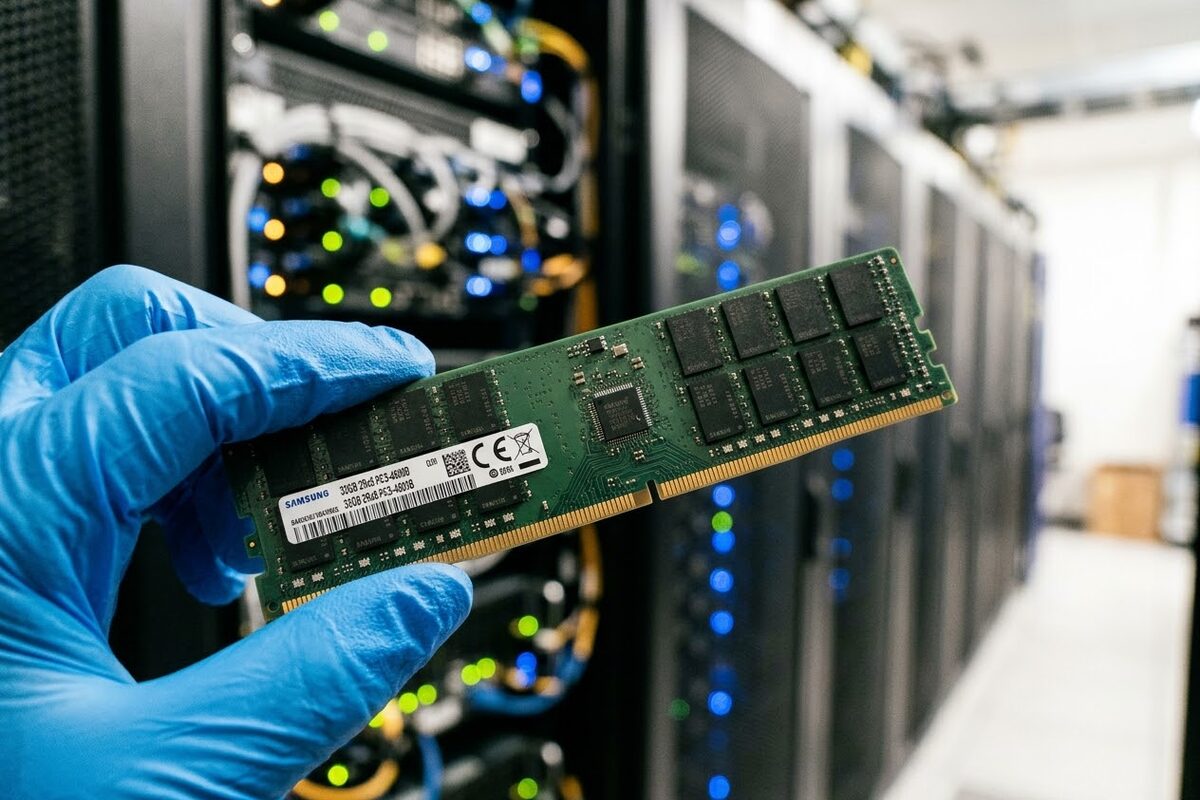
There are only three companies that make most of the world's memory: Samsung, SK hynix and Micron. AI chips need a special, expensive kind called high-bandwidth memory, or HBM, stacked right next to the processor. HBM is far more profitable than the ordinary memory in a phone or laptop, so the memory makers are moving their factory capacity toward it and toward server memory. Every wafer that becomes HBM is a wafer that doesn't become the LPDDR5X in your phone. Less supply for the consumer kind, same or more demand, higher prices. Nobody is being villainous here; it's just where the money is.
What the memory makers said last week
- SK hynix posted a record 80% operating margin and said its DRAM and HBM are "effectively sold out through 2029," counting long-term deals with 14 customers plus demand still being negotiated. Its DRAM prices rose in the high 20s percent in one quarter. (TrendForce)
- Samsung made 107 trillion won in operating profit, almost all of it from chips, and said its 2027 HBM is "already sold out." It plans to shift even more toward HBM, server memory and SSDs, and expects "some demand adjustment for mobile and PC" next year. Its own phone division said higher component prices will "persist into 2027" and expects to sell fewer mid-range and entry phones because of it. (CNBC, call transcript)
- TrendForce expects DRAM contract prices to rise another 10 to 15% this quarter and NAND, the storage chips, 15 to 20%. That's slower than earlier this year, when mobile memory jumped around 80% in a single quarter, but it's still going up. It also says phone makers are cutting production and PC makers are quietly putting smaller SSDs in mainstream laptops to hold prices. (TrendForce)
Apple chose to eat it, for now
Apple's numbers on Monday were records almost everywhere, and the stock still fell, because Apple guided its holiday gross margin to 45 to 46%, down from 47.9%. About a point of the old number was one-time tariff refunds; Apple said memory is most of the rest. John Ternus called memory pricing "unprecedented," and the CFO said it will "continue to be a challenge" through December. I wrote up the full quarter on Thursday. (call transcript)
Put plainly, Apple is paying more for the parts and not charging you more for the iPhone this Christmas. A company that size, with long supply contracts and cash to spare, can do that for a while. Smaller companies can't.
Who has already raised prices
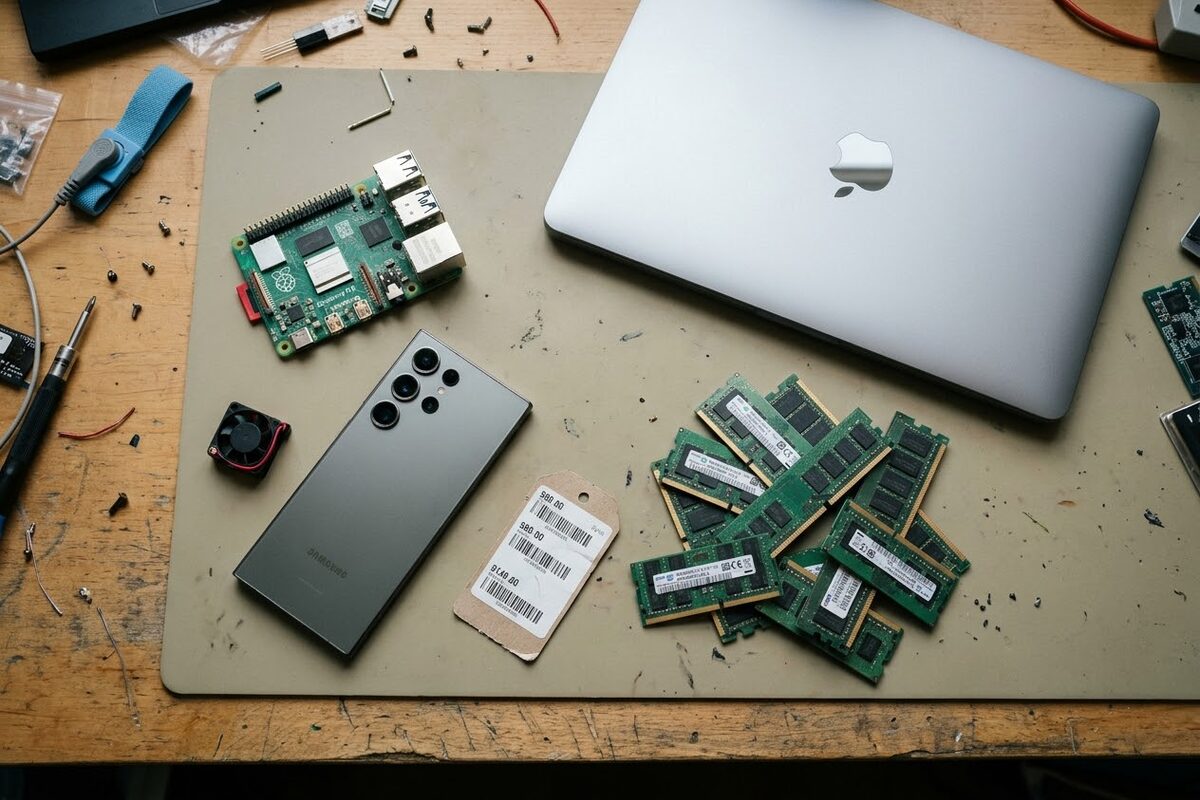
- Apple, quietly, on one product: the iPad mini went from $499 to $599 earlier this year, with Apple pointing to memory and chip costs, and the new OLED model is $699. (MacRumors)
- Nintendo: raised the Switch 2 by $50 in the US in May, citing "rising component prices, particularly for memory." (Engadget)
- Raspberry Pi: the 16 GB Pi 5 now sells for $385, after several increases this year. It launched at $120 in early 2025. (CNX Software)
- Xiaomi: its profit fell 42% in the second quarter and its phone margin dropped to 8.5%, which it blamed on memory. (Android Headlines)
What it means when you shop this month
I looked for a solid forecast that Black Friday discounts on laptops and phones will be smaller this year because of memory, and I couldn't find one. Adobe still expects electronics discounts to peak around 30%, about the same as last year. (Adobe) So I'm not going to tell you deals are disappearing. What I'd tell you is this:
- Check the storage and memory on any laptop deal. If a model that used to come with 512 GB now has 256 GB at the same price, that's the memory squeeze, and it's not a deal.
- Buy the memory you'll need now. Paying up for more RAM or storage today is probably cheaper than upgrading next year, if Samsung and Apple are right that costs keep rising into 2027.
- Don't wait on SSDs and RAM kits expecting them to get cheaper. Contract prices are still going up.
- Mid-range phones are where this hurts most, per Samsung itself. If a good one is on sale this month, that's a reasonable time to buy.
If you invest
The memory makers are having the best year in their history, and the companies that buy memory are the ones paying for it. That's the trade the market has been making for months. It won't last forever, because memory has always been a boom and bust business, but nobody making memory is talking about a bust yet. None of this is investment advice.
Verified November 4, 2026, from TrendForce, TrendForce on SK hynix, CNBC, the Samsung and Apple call transcripts, MacRumors, Engadget, CNX Software and Adobe. TrendForce doesn't publish a separate public number for phone memory this quarter, so I haven't given one. Written Wednesday for Saturday morning.
Comments
Be kind and stay on topic.
No comments yet. Be the first.