Thursday: Alphabet, minus 12.6 percent
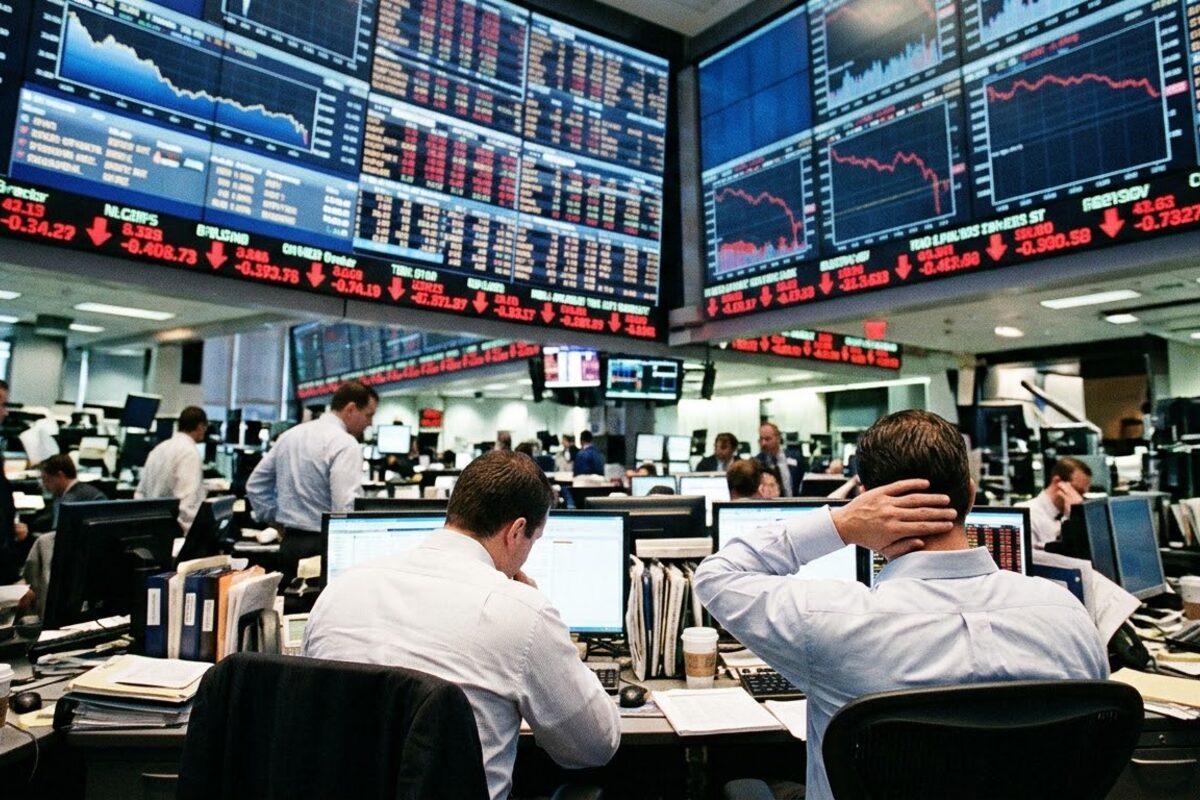
Alphabet closed Wednesday at $324.89 and Thursday at $283.82. That's a 12.64 percent drop, the worst single day in the company's history, beating the 11.6 percent it lost in March 2020. In dollars it's about $500 billion of market value in one session, and depending on whose count you use it's the second largest one-day loss any company has ever had, behind Nvidia's $589 billion in January 2025. Friday took another 1.4 percent. The stock finished the week at $279.84, down 12.6 percent for the week, its worst week since 2011, and it's now down for the year. (StockAnalysis, UPI, CNBC)
Here's the part I had wrong on Wednesday. I said the thing to watch was the 2027 capital spending number, and that we'd have it after the call. We didn't get one. Alphabet's finance chief said capex would "increase significantly in 2027" and that details would come on the next call, in late January. The "over $300 billion" figure that circulated Thursday is Bank of America's estimate and CNBC's framing of it, not Alphabet's guidance. So the market didn't sell a capex number. It sold the cash flow statement: free cash flow of negative $9.1 billion against negative $2.7 billion expected, long-term debt of $125 billion against $22 billion a year ago, and a Search quarter that missed. Capital spending itself actually came in below estimates. (CNBC)
One downgrade followed, from Citizens, whose analyst wrote that "monetization appears to be challenged while search faces difficult comps." Everyone else cut their price targets and kept their Buy ratings: Bank of America to $380, Goldman to $385, Citi to $375, UBS to $332, Wells Fargo to $371. The average target is still around $410, almost 50 percent above Friday's close. Make of that what you will. Consensus estimates before the report already had Alphabet's free cash flow negative through 2027, about $32 billion of outflow for the year. (CNBC, Yahoo Finance)
Microsoft: the 4 percent that vanished
Microsoft's after-hours pop on Wednesday was real and lasted about sixteen hours. The stock opened Thursday at $540, closed at $530.14, two cents below Wednesday's close, and fell another 1.5 percent Friday to $521.91. Flat for the week on the best report of the bunch. (StockAnalysis)
What Amy Hood actually guided on the call is worth having straight, because I've seen it described as "margin strength." Azure growth next quarter of 49 to 50 percent, well above the 45 percent the Street had. Capital spending "over $50 billion" next quarter and "approximately $170 billion" for calendar 2027. Microsoft Cloud gross margin "roughly 65 percent, down year over year." Operating margins "down slightly year over year." Asked for a Copilot number, she said they "did not disclose" one this quarter. Paid Microsoft 365 commercial seats grew 5 percent, with what she called "weaker sales execution." And the one line that separates Microsoft from the other three: "we expect to continue to remain free cash flow positive in FY '27." (Call transcript, Motley Fool)
Thursday night: Amazon, and the picture is finished
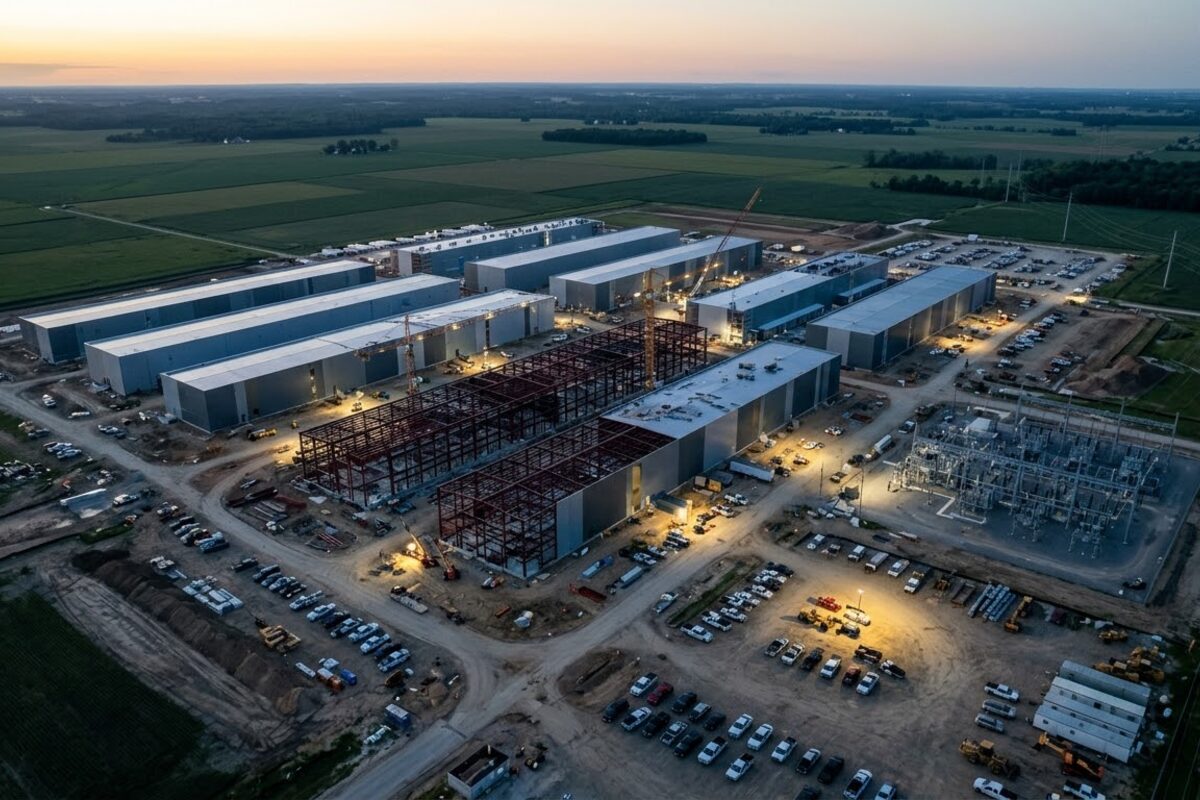
Last week I said Amazon's number would finish the picture Meta started. It did. Amazon's revenue was $201.9 billion, up 12 percent. AWS grew 39 percent to $46 billion, its fastest in almost five years, with a $578 billion backlog that more than doubled. Operating income was a record $28.1 billion, above the top of Amazon's own guidance. Then the other half of the release: purchases of property and equipment of $77.3 billion in the quarter, against $35.1 billion a year ago and about $59 billion expected. Trailing twelve-month free cash flow is an outflow of $42.4 billion, versus a $14.8 billion inflow a year earlier. Long-term debt went from $65.6 billion at the end of last year to $173.1 billion. Amazon kept its 2026 capex guide at about $220 billion and said 2027 will be "meaningfully more." Andy Jassy said AWS would grow above 40 percent in both 2027 and 2028. (Amazon's release)
The stock fell 4 percent Thursday on the Alphabet spillover before it even reported, dropped as much as 10 percent after hours, opened Friday at $232.54 and recovered to close at $240.35, down 1.4 percent on the day. Which tells you the market read it twice and decided the second time that 39 percent AWS growth buys a lot of forgiveness. (StockAnalysis)
So the scoreboard, three weeks of reports later: Meta, Alphabet and Amazon are all free cash flow negative, on a quarterly or trailing basis, because of AI data center spending. Microsoft is the only one of the four still positive, and it just told you its margins are going down to stay that way. Combined long-term debt at Alphabet and Amazon alone rose by about $210 billion in a year. That's the AI trade in one paragraph.
Friday: Intel, and the trillion
Intel beat on Thursday night. Revenue up 21 percent to $16.5 billion, data center and AI up 78 percent, earnings of 52 cents against 40 expected. Then it guided next quarter to $15 to $16 billion of revenue against $17.1 billion expected, said a fab explosion in Israel would cost about $600 million across two quarters, projected the PC market down 12 percent this year and 10 percent next, and said it won't generate positive free cash flow in 2026. The stock fell 28.6 percent on Friday, from $92.07 to $65.76, the worst day in its history. It had been up about 150 percent for the year going in. The federal government's 10 percent stake lost about $12 billion in a session. (CNBC, StockAnalysis, TechCrunch)
That took the chip sector with it. The Philadelphia Semiconductor Index fell 7.2 percent, Dell 13, AMD about 10, Nvidia 3 to 4. The S&P 500 closed Friday at 7,580, down 1.8 percent, its biggest drop since June 5. The Nasdaq closed at 25,437, down 2.9 percent, after being down as much as 3.4 percent in the afternoon. NBC News put the day's loss across the big tech names at "more than $1 trillion," a round estimate with no published method, so treat it as a scale rather than a figure. For the week the S&P was down 0.6 percent, the Nasdaq 2 percent, the third straight weekly loss for both. For October the Nasdaq lost 5.3 percent, its worst month since March 2025, while the Dow managed to gain 1.7 percent. (Yahoo Finance, NBC News, Investrade)
Two things to hold next to that. First, S&P 500 earnings are growing about 30 percent year over year this quarter with 60 percent of companies reported and 82 percent beating, per FactSet. The companies are making more money than ever. The market is arguing about what they're doing with it. Second, the Fed held rates at 3.75 to 4 percent on Wednesday with two dissenters who wanted a hike, and futures now price a December hike at better than 80 percent. The 10-year yield actually fell this week, from just over 5 percent to 4.94. Money is still expensive, and the companies borrowing the most just told you they'll borrow more. (Forbes, CNN, U.S. Treasury)
What I was sent, and what was wrong with it
The briefing I work from had the shape of the week right and most of the numbers wrong, so for the record:
- "Alphabet's 12.6 percent plunge erased over $250 billion." It was about $500 billion. Half the story is a strange thing to leave out.
- "The S&P 500 slipped to 7,658." That isn't a close on either day. Thursday was 7,720 and Friday 7,580.
- "Nasdaq dropped 3.4 percent." The Nasdaq 100 was down 3.4 percent at its worst Friday afternoon. The Composite closed down 2.9.
- "Intel plunges 30 percent." 28.6 at the close. 30 was the low.
- "Microsoft rallied on resilient Azure software margins and Copilot seat expansions." Microsoft closed Thursday down two cents and Friday down 1.5 percent. Hood guided margins down and declined to give a Copilot number. Every word of that sentence was invented.
- "Alphabet guided 2027 capex above $300 billion." Alphabet guided nothing for 2027 except "significantly." The $300 billion is an analyst estimate.
And one of my own. On Wednesday I wrote that Amazon and Apple both reported Thursday. Apple reports Monday, November 2, after the close. I had the wrong company on the wrong day, and I'm sorry for it. Apple's stock was roughly flat for the week, which is its own kind of statement in a week like this.
What I'm doing
Still nothing, and this week tested it more than last week did. I own all of these through broad index funds, so a $500 billion day shows up in my account as a bad Thursday, not a decision. The filter I gave on Wednesday still works, I just have to apply it honestly. A mark on a stock portfolio: that was part of Alphabet's miss, and it's noise. A slower Search quarter: real, and the one thing in all of this that would change what Alphabet is worth in five years if it keeps up. A capex number: we still don't have Alphabet's, and we do have Amazon's, and Amazon's is enormous and the stock ended Friday almost where it started.
If anything, the week made me more comfortable, not less, with not picking among these four. Three weeks ago the question was which company would blink first on AI spending. The answer is none of them, they all raised it, and the market punished the one with the weakest cash flow and forgave the one with the fastest cloud growth. I don't know how to trade that and I'm not going to pretend I do. The next piece of the picture is Apple on Monday, the one company in this group that isn't building data centers, and Nvidia later in November, the company all of that money is going to. I'm not a financial advisor, and this isn't advice for your situation. It's how I'm thinking about mine.
Verified October 31, 2026, from closing prices at StockAnalysis, FRED and the Treasury; Amazon's Q3 release; the Microsoft call transcript; CNBC on Alphabet, the analyst reaction and Intel; NBC News for the trillion-dollar estimate; MacRumors for Apple's November 2 date. Market cap figures for Alphabet range from $479 billion to $510 billion across outlets; I've used "about $500 billion." Earlier posts in this run: Wednesday's Alphabet and Microsoft post and last week's Meta post.
Comments
Be kind and stay on topic.
No comments yet. Be the first.