
Meta reported its third quarter after the close on Wednesday. Revenue was $64.6 billion, up 26 percent from a year ago, above the top of Meta's own forecast and above the roughly $63 billion analysts expected. Shares rose almost 4 percent after hours. By Thursday afternoon they were down about 7 percent, and the Nasdaq was down around 1.4 percent with them. (Source) (Yahoo Finance)
The answer to my question
My question on Tuesday was whether AI is making Meta's ad business more efficient, or just bigger. This quarter gave a real answer. Ad impressions grew 10 percent. The average price per ad grew 14 percent. Advertisers are paying more for each ad, which is what you'd expect if the AI is putting ads in front of people more likely to buy. Meta said it plainly: its AI investments are "already delivering substantial incremental advertising revenue."
That's about the best version of the story you could ask for. So why did the stock fall?
The spending
Meta spent $34.9 billion on capital expenditures in three months, mostly data centers and servers. A year ago the same quarter was about $19.4 billion. Operating cash flow was $32.8 billion, so free cash flow went negative, minus $2.1 billion for the quarter. Meta narrowed its 2026 spending forecast to $135 billion to $145 billion, which raises the floor by $5 billion, and said it expects to "continue investing aggressively" in 2027 without giving a number yet. Long-term debt is $80.9 billion, up from $58.7 billion at the start of the year, and there have been no buybacks in 2026. (StockTitan)
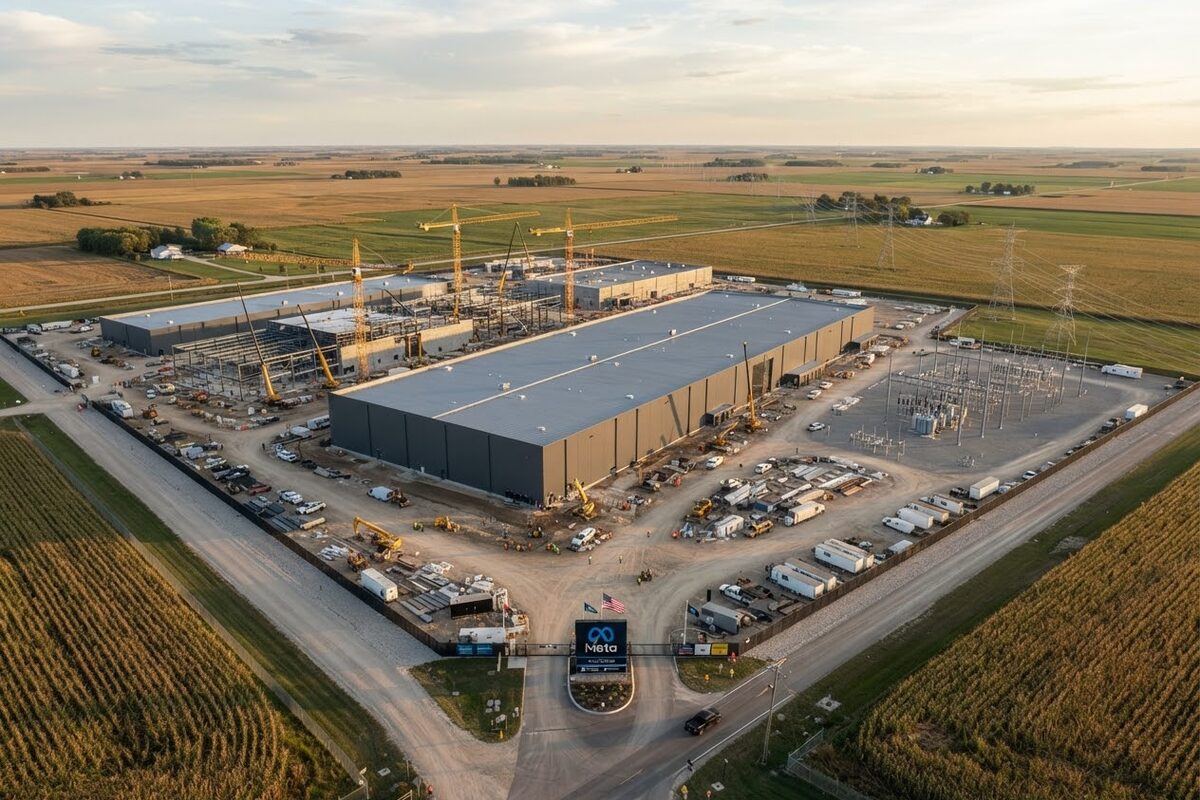
That's the part the market priced. A company that makes enormous profits spent more than it brought in last quarter and borrowed to keep going. Meta also wrote that its superintelligence lab "will take longer to generate returns than those in our core business." That's an honest sentence. It's also exactly the kind of sentence that makes people sell.
The legal charge and the new stock
Two other things were in the release. The first is a $9.9 billion charge tied to an agreement in August with 52 state attorneys general over teen mental health and social media, with payments of up to about $18.6 billion over time. That charge is why earnings came in at $3.83 a share instead of about $7.40. Meta also says more youth-related trials are scheduled in the coming months, so this isn't the last of it.
The second is a new class of stock. Every Class A and Class B shareholder will receive one non-voting Class C share for each share they own, planned for around January 19, 2027. Meta says the Class A price should adjust as if the stock split two for one. The stated reasons include raising capital, paying employees and making acquisitions. Shareholders won't vote on it, because holders with enough votes already approved it in writing. The plain read: Meta now has a currency it can issue to raise money and pay people without diluting anyone's vote, Mark Zuckerberg's above all. StockTitan's read of the filing adds that he can freely sell only 20 percent of his new Class C shares and has committed to staying a California resident for eight years, which the filing ties to the state wealth tax on the November 3 ballot. (StockTitan)
As a small shareholder through index funds, I never had a meaningful vote anyway. What I'll watch is how many Class C shares Meta actually issues once it can, because that's where dilution shows up.
Tesla, briefly
Tesla reported about an hour later. Adjusted earnings were 48 cents a share against roughly 45 cents expected, on flat revenue of $28.05 billion. Net income fell 43 percent to $787 million, because spending on AI and the Optimus robot is growing faster than gross profit. The good news was car margins: automotive gross margin excluding regulatory credits recovered to 18.1 percent from 16.3 percent the quarter before. Energy revenue fell 16 percent. Shares slipped about 3 percent after hours. (Electrek)
Three corrections to what I was sent
- "Core ad revenue showed steady single-digit gains." It grew 26 percent. That's the opposite of the story.
- "Meta reiterated its capex guidance for 2026 and 2027." It narrowed 2026 and gave no 2027 number.
- "Central banks are drafting capital rules for debt-financed AI infrastructure, and rating agencies are circling." I couldn't find a source for either this week. The real version is simpler and it's in Meta's own numbers: about $22 billion more debt than in January.
What I'm doing
Nothing, still. I own Meta and Tesla through broad index funds, in proportion to their size, and a 7 percent day doesn't change that. On Tuesday I said to wait until Friday before acting on a reaction. I'd stretch that further now. Microsoft and Alphabet are expected to report next Wednesday and Amazon the day after, and their spending numbers will tell you more about the whole AI trade than Meta's alone.
I'm not a financial advisor, and this isn't advice for your situation. It's how I'm thinking about mine.
Verified October 22, 2026. Revenue, ad metrics, capex, free cash flow, guidance, the legal charge and the Class C plan from Meta Investor Relations, with the release text and filing details as reported by StockTitan and StockTitan. Stock moves from Yahoo Finance and its market live blog; Thursday's figures are intraday and may differ at the close. Tesla from Electrek and Investing.com. Next week's earnings dates come from calendar services; confirm on each company's investor page.
Comments
Be kind and stay on topic.
No comments yet. Be the first.