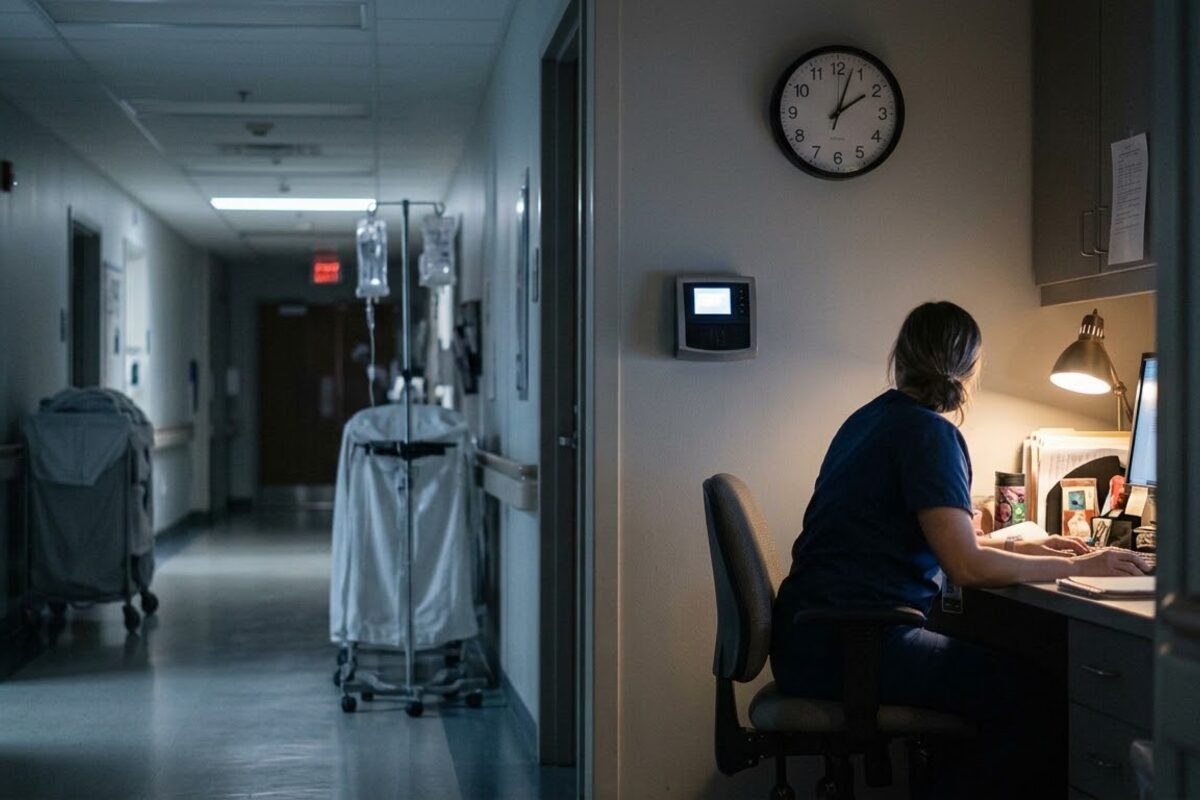
What happened at 2 a.m.
At 2:00 a.m. local time on Sunday, November 1, clocks went back to 1:00 a.m. The hour between 1 and 2 happened twice. Daylight saving time comes back on Sunday, March 14, 2027. None of this applies in Hawaii, most of Arizona, Puerto Rico, Guam, the U.S. Virgin Islands, American Samoa or the Northern Mariana Islands, which stay on standard time all year. (NBC News, NCSL)
If your shift ended before 1 a.m. or started after 2, nothing changed for you. If you were clocked in across that hour, you worked it twice. Nurses, security guards, warehouse crews, hotel front desks, gas stations, bakers, anyone on the overnight. I spent years on schedules like that, and nobody ever explained this to me. I found out from a pay stub that was wrong.
The federal rule, in the Labor Department's words
The U.S. Department of Labor has a page on exactly this. It says employees "working the graveyard shift when Daylight Savings Time ends work an extra hour," and that the Fair Labor Standards Act "requires that employees must be credited with all of the hours actually worked." Its own example is a shift scheduled 11 p.m. to 7:30 a.m. with a half-hour lunch, normally 8 hours. On the fall night the worker "works the hour from 1:00 a.m. to 2:00 a.m. twice," so "on this day the employee worked 9 hours, even though the schedule only reflected 8 hours." (U.S. Department of Labor)
That ninth hour is not a bonus and not a favor. It's hours worked, which means three things:
- It's paid at your regular rate at minimum. An employer can't schedule you for 8, keep you for 9, and pay 8.
- It counts toward the 40-hour week. If you were already at 40 for the week, that hour is overtime at time and a half. Employment lawyers describe it as the week people "inadvertently work 41 hours." (Goldberg Segalla)
- In California it's overtime on its own. California pays time and a half after 8 hours in a workday, so a 9-hour night is an hour of overtime even if your week is short. The California Employers Association put it plainly this week: "A ninth hour of work in a workday due to the end of Daylight Saving Time would need to be paid out at time and a half." Alaska has a similar daily rule. Nevada's applies only to lower-wage workers, and Colorado's daily overtime doesn't start until 12 hours. (California Employers Association, CalChamber)
Two more things so this is complete. In March, when the clocks jump forward and the overnight shift works 7 hours, the law only requires paying the 7, though many employers pay 8 anyway. And if you're salaried and properly exempt from overtime, none of this changes your check in either direction. Your salary covers the week however long it runs. (29 CFR 541.602)
The mistake, and where it hides
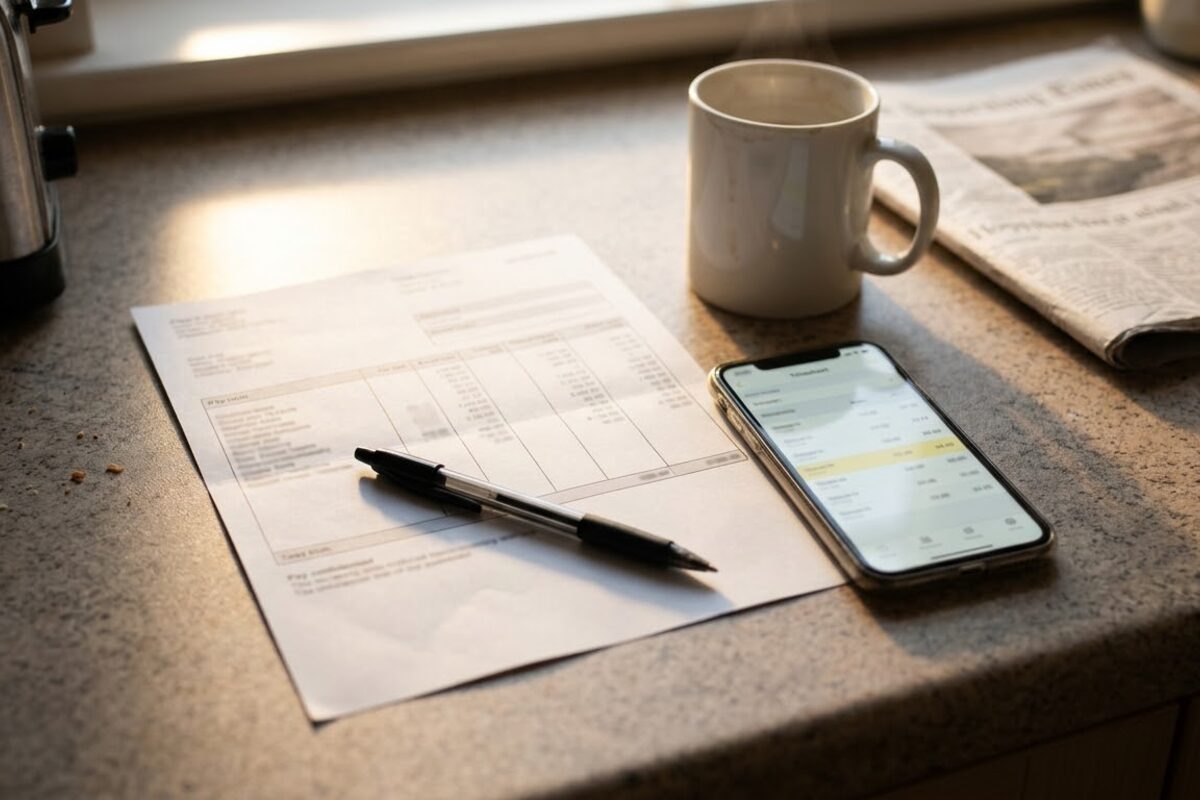
The problem is almost never a boss trying to cheat you. It's the time clock. A lot of timekeeping systems store the wall-clock time you punched in and out, and then do the subtraction. Punch in at 11:00 p.m., punch out at 7:00 a.m., the system says 8 hours, every night of the year. On the one night a year when that's wrong, it's wrong by a full hour in the employer's favor. One payroll vendor's own guidance calls a flat 8 on a 9-hour night "a defective record." Some systems that handle time zones badly make it worse by putting the overnight punches in the wrong day entirely. (Kloqk, CloudApper on Workday)
So here's what to check, in order:
- Your time card for the night of October 31 to November 1. The total should be one hour more than a normal night. 9.0 if you usually show 8, 8.5 if you usually show 7.5 with a lunch.
- Your week total. One hour higher than a normal week. If that pushes you past 40, the extra should be at the overtime rate.
- If you're in California or Alaska, that ninth hour should show at time and a half regardless of the week.
- If it's short, tell your supervisor or payroll before the pay period closes. Most will fix it in a minute once they see it. If they won't, that's a wage claim, and the Department of Labor page above is the document to bring.
If you want to run the numbers, the paycheck and overtime calculator handles the 40-hour math, and the shift differential calculator does the night-premium version, where the differential belongs in your overtime rate and payroll often leaves it out. Both are free and run in your browser.
Why we're still doing this
This was supposed to be the year it stopped. The House passed the Sunshine Protection Act, which would make daylight time permanent, on July 14 by 308 to 117. It went to the Senate the next day and has sat in the Commerce Committee since. The president has pushed for it in public several times this fall, including a post on October 26 saying the Senate "is letting the Daylight Saving Bill die." Senate leadership says there's no consensus. One senator's stated objection is that permanent daylight time means kids walking to school in the dark all winter. (NBC News, Newsweek)
That objection got a data point this week. A paper in Current Biology on October 29 estimated that permanent daylight time would add on the order of two billion before-sunrise school commutes nationwide over the years, and that in a decade of fatal morning crashes, pedestrians aged 5 to 18 were about twice as likely to be involved when it was dark. (Phys.org)
Nineteen states have passed laws saying they'll go to permanent daylight time the moment Congress allows it, Texas the latest in 2025, none this year. The sleep doctors want the opposite. The American Academy of Sleep Medicine's position is that the country should drop the clock changes in favor of permanent standard time, the one we just switched to, because it "aligns best with human circadian biology." So the fight isn't just whether to stop changing clocks. It's which clock to stop on. (NCSL, AASM position statement)
What the change does to you, honestly
The fall change is the gentle one. The study everyone quotes about heart attacks, 42,000 admissions in Michigan over four years, found a 24 percent jump on the Monday after the spring change and a 21 percent dip on the Tuesday after the fall one, with no change in the weekly total either time. So it shifts when heart attacks happen within the week, it doesn't prevent them. (Open Heart, 2014)
The real risk of this week is the evening commute. Sunset just moved an hour earlier, and people driving home at 5:30 haven't adjusted. The Insurance Institute for Highway Safety looked at a decade of fatal crashes and found pedestrian and cyclist deaths rise in the weeks after the fall change while vehicle-occupant deaths fall, and the reverse in spring. It's close to a wash over the year, which is why IIHS says road safety alone doesn't settle the debate. But this specific week, if you walk or bike home, assume nobody can see you. (IIHS)
For your own sleep, the advice is boring and works: get outside in the morning light today and tomorrow, keep your bedtime where it was, and don't use the extra hour as a reason to stay up. If you want to see where you stand, the sleep debt calculator is a two-minute check. I wrote more about this from the shift-work side in what shift workers taught me about sleep.
The clocks that didn't change themselves
- Your phone did, if automatic time is on. iPhone: Settings, General, Date & Time, Set Time Automatically. Android: Settings, System, Date & time, both the automatic time and automatic time zone switches. If you ever set the time by hand, check it. (Apple Support)
- Your oven, microwave, bedside alarm and wall clocks didn't. They never do.
- Your car might not have. GPS gives the car the time but not your time zone or whether to observe daylight saving. Newer systems have a DST setting that handles it. If the dash clock is exactly an hour off this morning, find that setting before you start changing the time by hand.
- Smoke and carbon monoxide alarms. The Consumer Product Safety Commission's standing advice is to change the batteries when you turn the clocks back, test monthly, and replace any alarm over ten years old. If yours has a sealed ten-year battery, you replace the whole unit when it chirps instead. (CPSC)
What I'm doing
Checking the oven clock, like every year, and sending this to two people I know who worked last night. If you know someone on the overnight, send it to them. The hour is small. The habit of reading your own time card isn't. I'm not a lawyer, and this is general information about federal and California rules, not advice for your situation. Your state may add to it, your union contract may add to it, and your HR department has to follow all of it.
Verified October 31, 2026. The pay rule is from the U.S. Department of Labor's Hours Worked Advisor; the exempt-salary rule from 29 CFR 541.602; California daily overtime from CalChamber and the California Employers Association, both dated October 27, 2026; other states' daily rules from payroll compliance guides, not state agencies, so check your own state's labor department. Legislative status from Congress.gov (H.R. 139), NCSL (updated October 12, 2026) and the Sleep Foundation's tracker. Health and road figures from the studies linked inline; the Michigan heart study's authors call it exploratory. I found no Labor Department enforcement case specifically about the daylight saving hour; the warnings come from employment lawyers and payroll vendors.
Comments
Be kind and stay on topic.
No comments yet. Be the first.