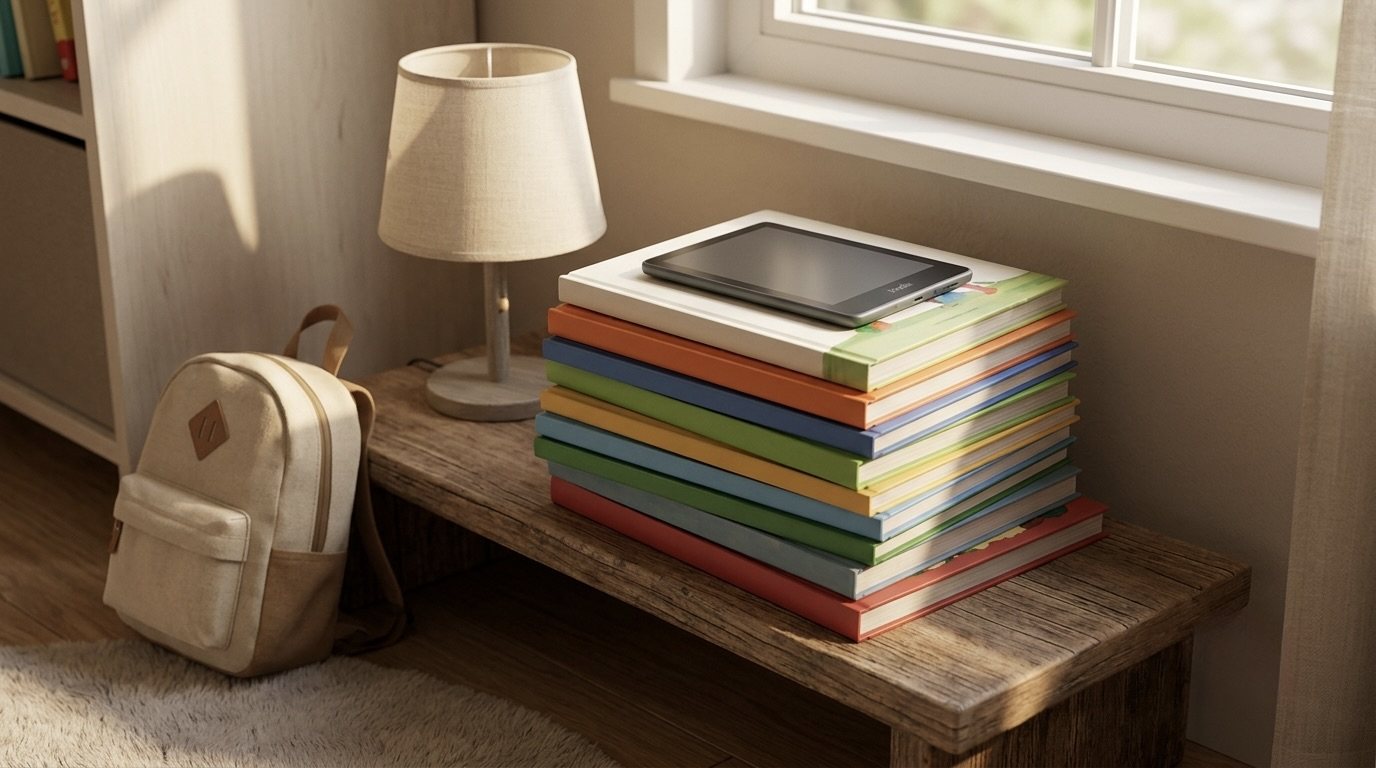
First, the number in the headline, because it changed how I think about this. The Nation's Report Card released its long term trend results in June. Nine year olds improved in both reading and math, a real reversal after years of decline, and the kids tested had mostly missed the pandemic school disruption. But only 37 percent of nine year olds said they read for fun every day. For thirteen year olds it was 14 percent, the same as 2022, and down from 35 percent in 1984 (Source). The scores are recovering. The habit is not. And the habit starts years before anyone is nine, on a lap, with a picture book, at the exact age this list is for.
September is a good month to start. It is Library Card Sign-Up Month, which the American Library Association has run every September since 1987, this year with the singer Laufey as honorary chair (Source). International Literacy Day was Tuesday the 8th. Roald Dahl Day is Sunday the 13th. And more practically, it is the month of first days, first drop-offs, and first nights where a five year old is too wired to sleep. Here is what I would hand a kid for each of those, starting with the books that have been doing this job for decades.
Full disclosure before the list: I write and publish picture books myself, 35 of them, and I have put mine on this list where I think they belong next to the classics, clearly labeled. I am not going to pretend a book I wrote last spring is Goodnight Moon. I am going to tell you what each of mine does that the classic next to it does not.
1. The first day, and the goodbye at the door
The Kissing Hand by Audrey Penn, illustrated by Ruth E. Harper and Nancy M. Leak (1993). Thirty years later it is still the book teachers hand out on the first day, because it gives a kid a physical ritual, a kiss pressed into the palm, that survives the drop-off. Llama Llama Misses Mama by Anna Dewdney (2009) is the honest version of the first morning at preschool, where the fix is not Mama coming back early but the other kids and the play. The Invisible String by Patrice Karst (2000) stretches the same idea to any separation, which is why counselors keep it around for harder goodbyes than school.
Mine: The Goodbye Button started as one small ritual, Mom draws a purple sun on Josie's palm and one on her own, and press yours and mine buzzes. If that sounds like a cousin of The Kissing Hand, it is, on purpose. The difference is the series: the same button gets redrawn for a first sleepover, a scary new skill, and a mistake that feels too big to fix, so the ritual grows with the kid instead of staying at the classroom door. For the countdown itself, Ten More Sleeps Till Kindergarten is the one for a kid who copes by making plans. And There's Room on the Rug is told by the round rainbow rug in Room 7, for the kid who counted the spots in the circle and could not find one for himself.
2. Bedtime after a long day
Goodnight Moon by Margaret Wise Brown, illustrated by Clement Hurd (1947), is the template every wind-down book copies: slow, repetitive, low stimulation, built to be the last thing before the light goes off. Llama Llama Red Pajama by Anna Dewdney (2005) is for the other kind of bedtime, the one where the kid is not sleepy, is alone in the dark, and panics, and the rhyme carries them to the reassurance at the end. Between the two of them you have the calm night and the loud night covered.
Mine: Hush, Little Garden is my Goodnight Moon shaped book, a board book where the sun is going down but the garden is still loud, and it hushes one creature at a time. The series follows the same garden waking up, letting go in autumn, and resting through winter, so there is a version for whatever season you are reading in. When the House Gets Quiet does the same thing with a house, listen, it is almost, almost quiet. And for the kid who has one rule about bedtime and the rule is that she is against it, The Night Shift is Wren's book.
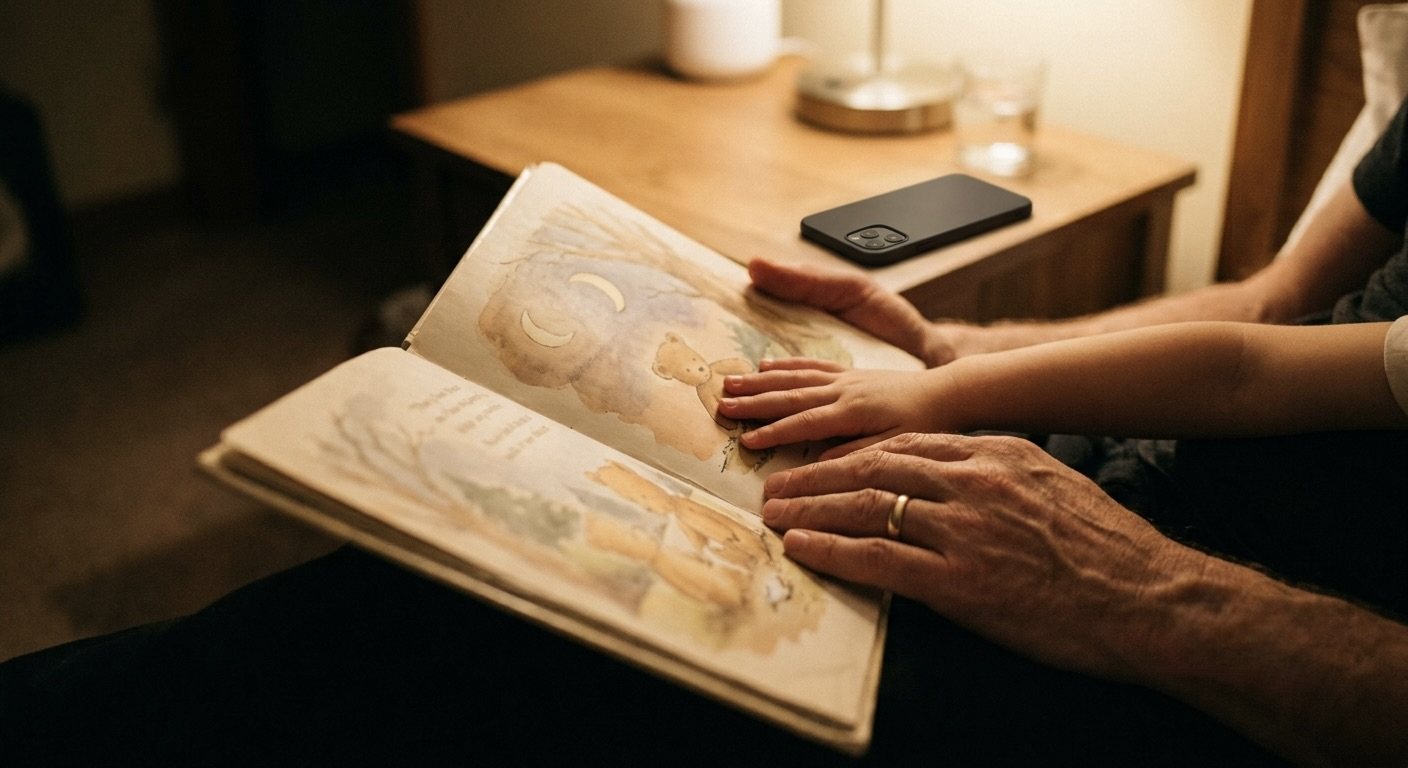
3. Feelings that get too big
The Color Monster by Anna Llenas (2012) is the one teachers and therapists reach for first, because it gives a kid a color for each feeling before asking them to talk about any of it. Yellow is happy, blue is sad, red is angry, and a monster who is all of them at once is a mess until someone helps him sort the jars. It is a vocabulary book disguised as a picture book, and vocabulary is most of the battle at four.
Mine: The Wobbles takes the next step after naming. Wobbles are wiggly little worry creatures only Mara can see, and they get bigger every time she keeps them secret. Each book drops her into one specific nervous moment, a new school, a sleepover, a checkup, one line in the spring show, and lands on the same fix, say it out loud. For an older kid, The Big Feelings Toolkit is Zora's list of what to actually do when feelings get too big for your socks. And for the youngest, Cami the Chameleon is a color changing chameleon whose skin shows exactly how she feels, which is The Color Monster's idea at board book age.
4. A new baby in the house
I'm a Big Brother and I'm a Big Sister by Joanna Cole, illustrated by Rosalinda Kightley (1997), are the standard for the older sibling, because they are told from the older kid's point of view and they reassure instead of lecture. Read them before the baby arrives, not after.
Mine: I Loved You Before Hello is for the baby, not the sibling, a board book series that starts before the child arrives and follows through every first, the hard days, and every goodnight. It is written for whoever is holding the baby, on purpose, with no assumption about what the family looks like. It pairs well with the Cole books because it gives the older kid something to read to the new one.
How to actually do this
Get the library card this month, it is free and the classics above are on every shelf. Pick one book per problem, not five. Read the same one for a week, because repetition is the point at this age, not variety. Read it at the same time each night, and let the kid turn the pages, which is the only part of screen time a picture book cannot do. And if you are a teacher, a librarian, a counselor, or you run a waiting room, the studio sells its books direct in sets of 20 or more at $10 a copy, mix and match, with a W-9 and purchase order handling for schools. Details are on the bulk orders page.
Every book I mentioned of my own is on the books page with an Amazon link. Every classic is at your library. Thirty seven percent is a number I would like to see move, one lap at a time.
The reading statistic comes from the National Assessment of Educational Progress long term trend results as reported by NPR on June 10, 2026, and Library Card Sign-Up Month details are from the American Library Association, both linked inline. Classic titles, authors, and years were checked against publisher and library listings. Books on the books page link to Amazon through an affiliate program, which is disclosed there. September 11, 2026. The apps that go with some of these books, a chore tracker, a pet health vault, a sleep app for shift workers, are at jcmobileappstudio.com/apps.
Comments
Be kind and stay on topic.
No comments yet. Be the first.